The Joy of Slow Weaving
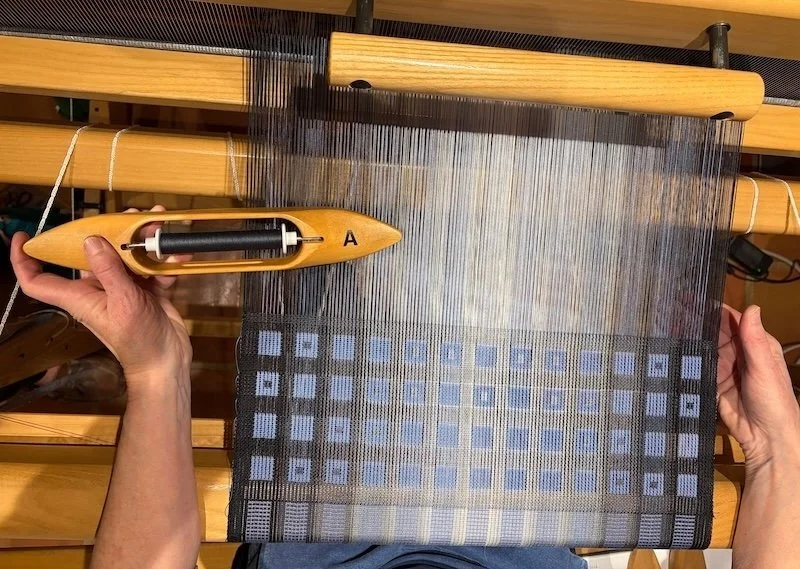
This past summer I taught my doubleweave sampler workshop at one of the regional weaving conferences. About midway through the workshop one of the participants, noticing that she wasn’t as far along as some of the others, lamented that she wasn’t a very fast weaver. I said that I’m not a very fast weaver either and never have been. She came up to me later and told me that hearing me say that was a breakthrough for her. She said it made her feel that she could relax and enjoy weaving comfortably at her own pace, which is what I always want my students to do.
Now, weaving efficiently is definitely a good thing, and if that makes you weave faster that is a fine thing too. If you are a production weaver or weaving for a particular deadline, then weaving at a good pace can be important. But otherwise, let’s stop and think about why you weave and what inspired you to learn to weave in the first place. I’m sure it wasn’t to save time by weaving your own clothing or table linens. And I’ll bet it wasn’t to have a quick and easy way to make a living.
Maybe it was the yarn, with all its wonderful colors and textures. Maybe it was a fascination with looms, appreciating the craftsmanship that goes into them and understanding the way they work. Maybe it was the thought of being able to create beautiful things for yourself and people you care about with your own unique sense of design. Perhaps you fell in love with spending time at the loom, feeling the rhythm of the passing of the shuttle and the swing of the beater, losing track of time as you got caught up in the meditative process.
For me it was all of these things. No matter how stressful of a day I may have had and no matter how many fires I have had to put out, when I get into my studio and sit down at the loom, everything starts to slow down and my mind starts to relax. It feels like one place in the world where everything makes sense to me. Unlike with my phone or my computer, things don’t just suddenly change overnight without my consent or knowledge. When I come back to my loom the next day the threads are still on the same heddles and haven’t shifted position when I wasn’t looking. Yes, I know things don’t always go as smoothly as we might like when winding a warp or setting up the loom, but in the big picture of crises, these are pretty solvable and nobody dies in the process.
How lucky we are that we get to spend time with beautiful yarn, feeling it pass through our hands with every weft pick we throw and get the satisfaction of watching cloth emerge one step at a time as we press each weft shot into place. Why should we feel compelled to rush through this sublime process? It’s like rushing through a delicious meal that someone has lovingly prepared for us.
Right after I graduated from college I had my mother teach me how to knit and I fell right in love with doing that too. I was living in a tiny place and barely had the money to make the rent on that. But I went to a yarn store and spent a long time looking at all the gorgeous balls and skeins of yarn, imagining all the wonderful things I could make with them. In the end I was drawn to a soft fingering weight yarn in a delicious sage green that had a delicate fuzzy texture. And I picked out a somewhat complex sweater pattern with a geometric lace detail in the yoke that I knew would take me months to knit. I chose this not just for its beauty but also because I knew I would get to have many more hours of holding it in my lap and feeling it pass through my fingers than I would if I chose a thicker yarn that would be quicker to knit.
I’ve had the good fortune of being able to travel to many parts of the world where the traditions of weaving and other fiber arts go back for centuries. I find it a humbling experience to see the time and the care that so many of these weavers put into the things they create, often with much finer yarns and much slower processes than many of us would consider doing.
One time I was in the community of Pitumarca, Peru, watching several of the weavers working together in a technique called ticlla, or scaffold weaving, or discontinuous warp. This is a phenomenally slow process of interlocking warp threads of different colors, weaving them in a warp-faced structure on backstrap looms. As the weaver gets close to the places where the warps interlock they have to weave over and under each warp end with a needle because the shed is too small to pass a stick shuttle through. Looking at the cloth I realized that the end poduct was very much like tapestry, but turned sideways, and that it would be much faster to weave as tapestry with weft interlocks. I aksed Nilda Callañaupa, the director for the Center for Traditional Textiles of Cusco why they don’t just weave it sideways as weft-faced tapestry instead. She said,”Because this is what they do.”
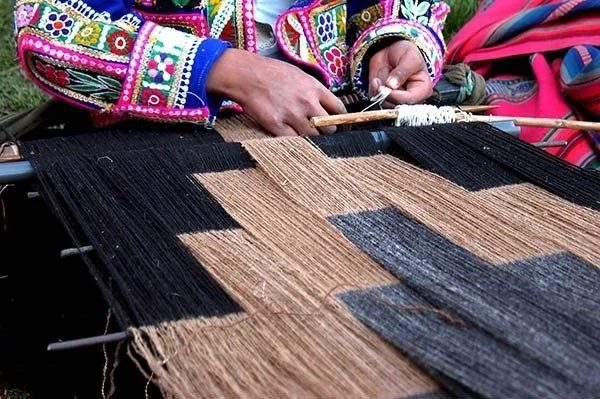
Pitumarca, Peru
This is what we do. This is what we have chosen to do. We choose to weave, not because we need to produce our own cloth to make our clothing or our household textiles. We choose to weave because we love working with beautiful yarns and making beautiful textiles. We choose to weave because we love the process of weaving. Wherever in the world you are, whatever it is you’re weaving at whatever pace, I hope you are enjoying every minute of the time that you are at your loom.
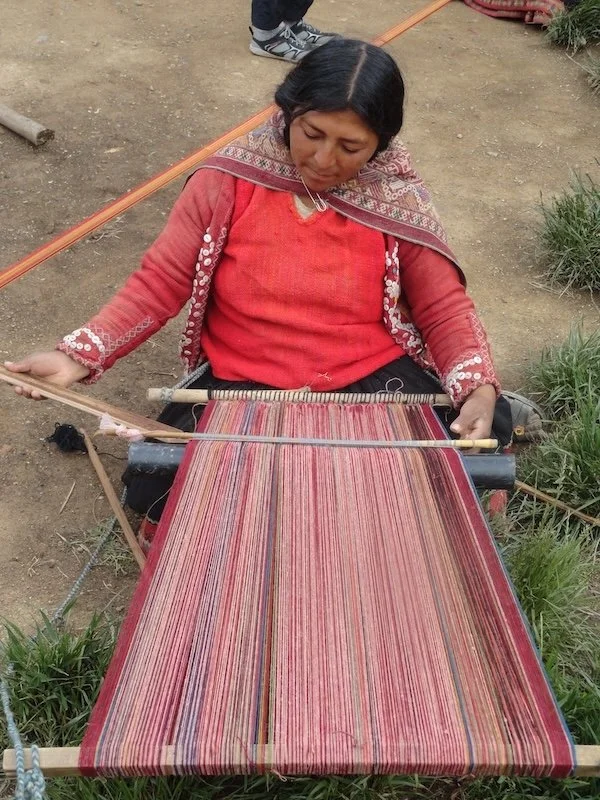
Accha Alta, Peru
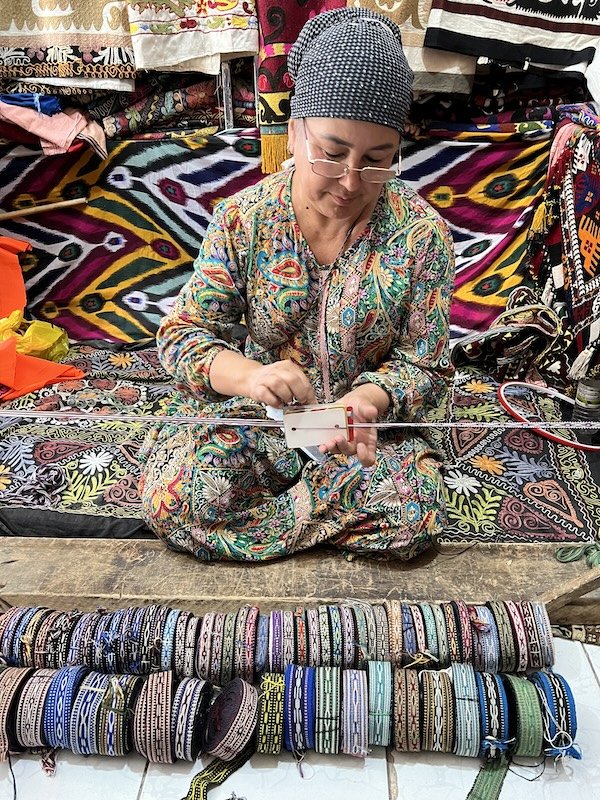
Urgut, Uzbekistan
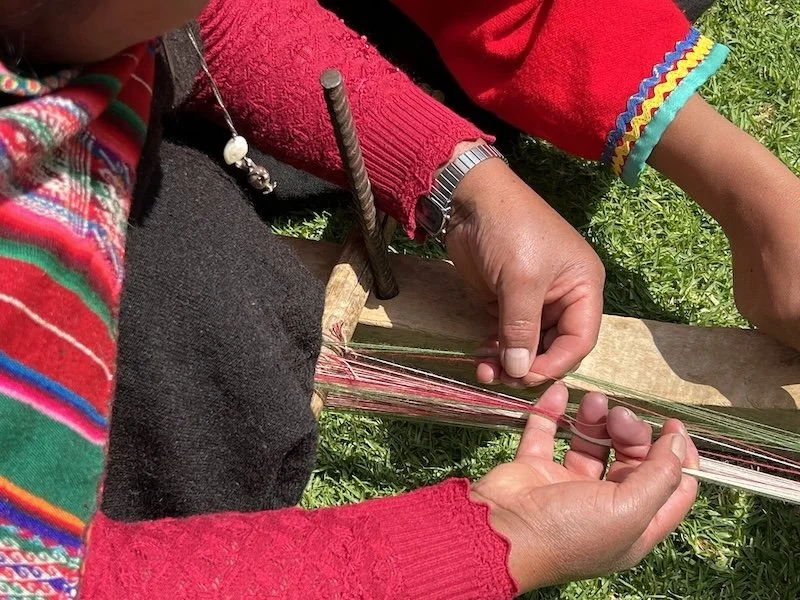
Kallahuaya weaver, Bolivia
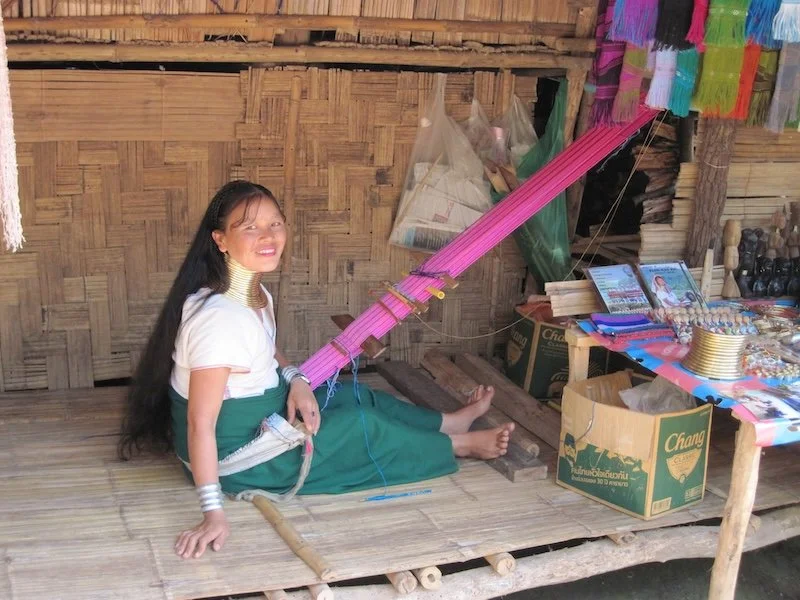
Long Neck Karen, Thailand

J’alqa weaver, Bolivia
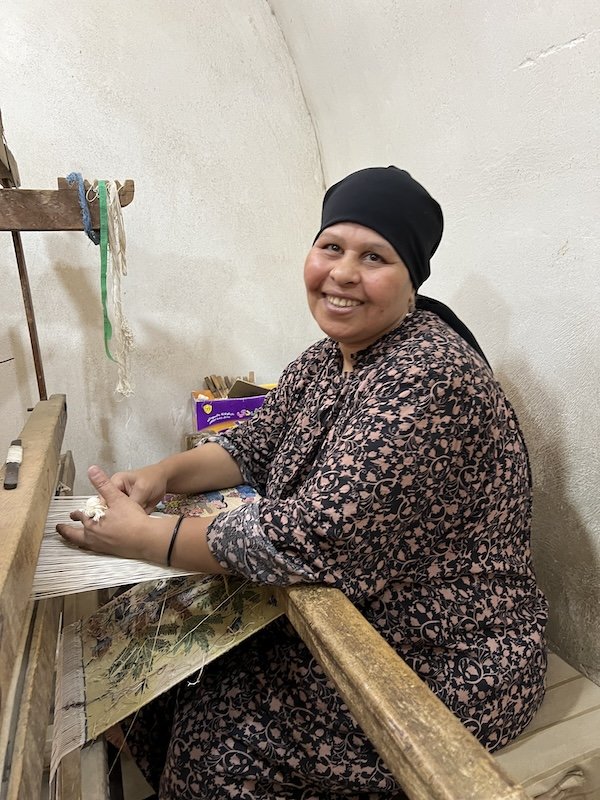
Harrania, Egypt